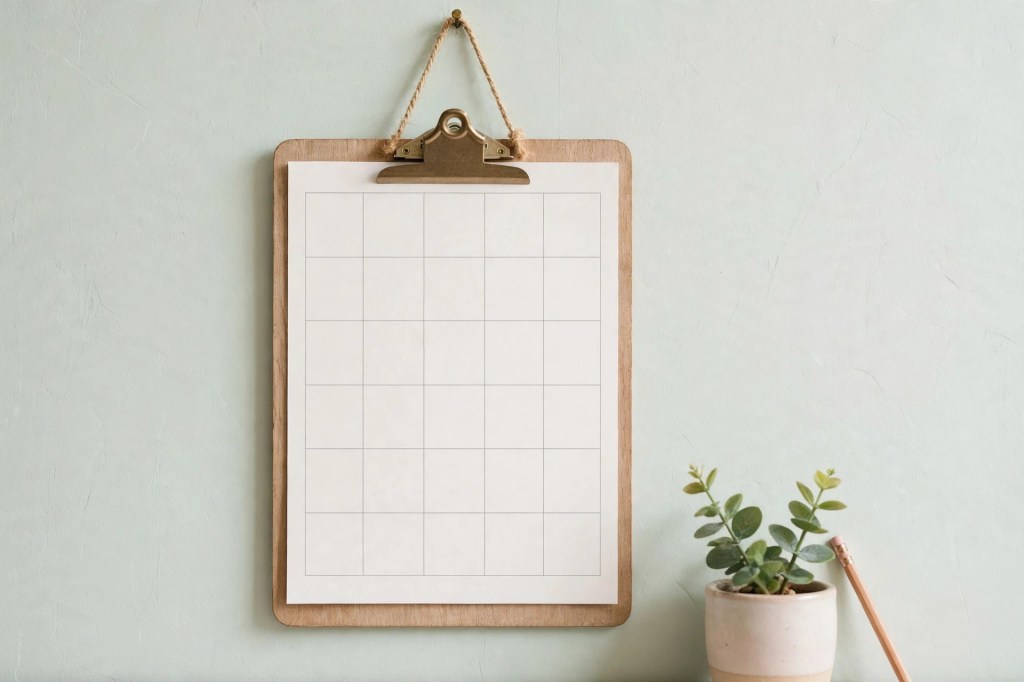
Habit trackers are one of the most searched digital products out there — and one of the easiest to get wrong. It’s tempting to cram in thirty habits, a mood scale, a water log, and a gratitude box, all on one page. But a tracker nobody finishes is just a pretty file sitting on someone’s computer.
The trackers people actually use — and buy again — are almost boringly simple. Here’s how to make one.
Start With Habits People Already Want
Don’t invent habits. Borrow the ones people are already trying to build: drinking more water, reading before bed, walking every day, taking vitamins, saving a little money each week. These are the habits your buyer is already thinking about on Sunday night.
A tracker people finish beats a tracker that looks impressive.
Your job isn’t to convince someone to want a new habit. It’s to give them a simple, satisfying way to keep the one they already want. When the habit feels familiar, the tracker feels like help instead of homework.
Keep It to One Page
One page, one habit group, one month.
That’s the whole formula. One page for the month. One small group of related habits — morning habits, health habits, money habits, not all three at once. Thirty-one little boxes, one row per habit, and that’s it.
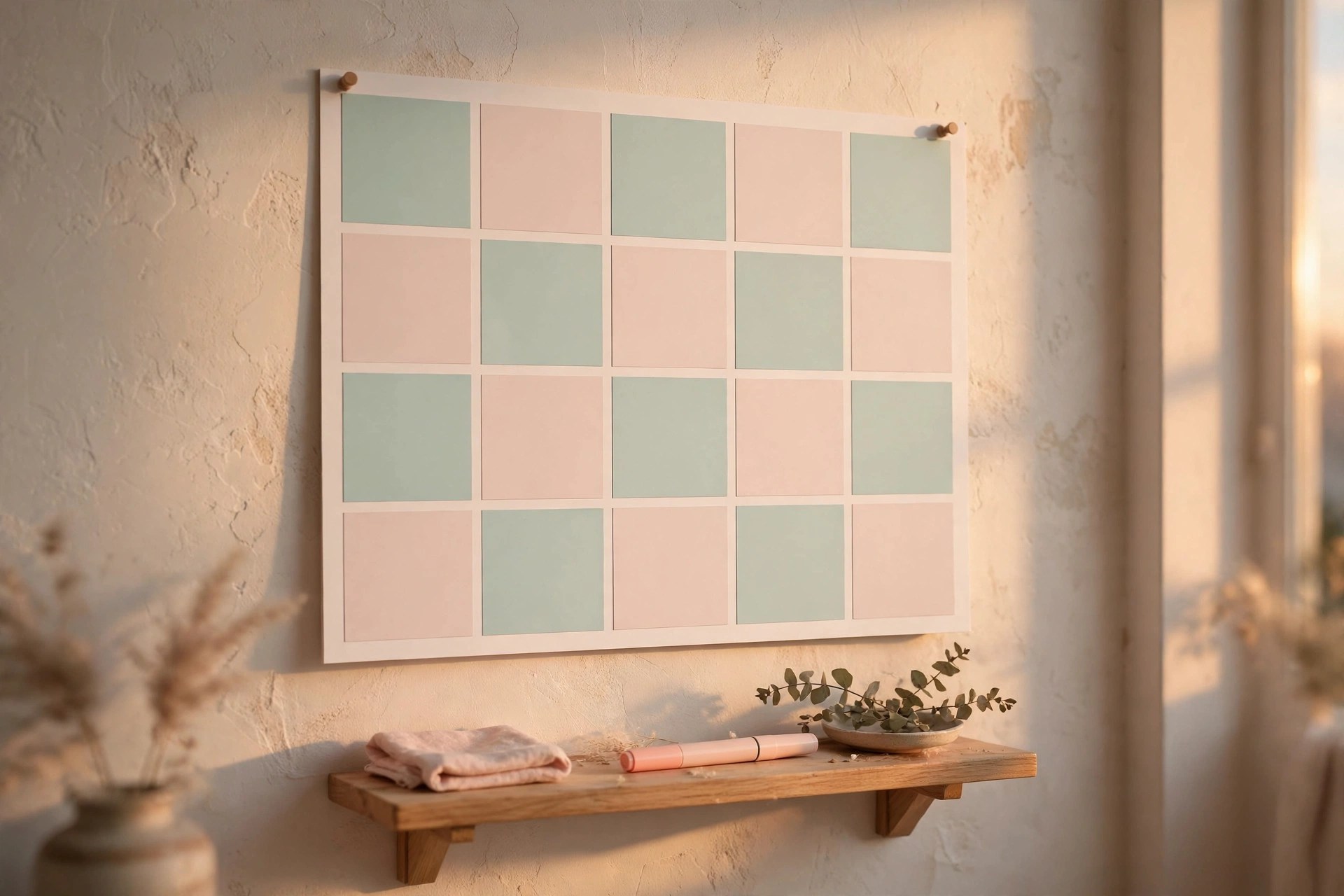
When a buyer opens your tracker, they should understand it in five seconds: rows are habits, columns are days, check the box when it’s done. If they need instructions to use it, it’s already too complicated. Simple is what makes it printable, and printable is what makes it used.
Make Checking It Off Feel Good
Here’s the secret nobody talks about: the checkmark is the product. People don’t buy trackers for the paper. They buy them for the tiny rush of filling in a box at the end of the day and seeing a row of checks grow across the month.
Blank space is where the habit lives.
So give the boxes room. Make them big enough to color in, check off, or sticker over. Leave breathing room around the edges so the page feels calm, not crowded. A tracker that feels good to fill in gets filled in — and a filled-in tracker gets shown to friends, pinned on fridges, and bought again next month.
Test It on Your Own Week First
Test it on your own week first.
Print your tracker, stick it on your fridge, and use it for seven days before you ever list it. You’ll learn things no screen preview can show you: boxes that are too small for a pen, a layout that feels cramped by week two, a habit row you forgot you even added.
I’m a homeschooling mom of two, and my weeks are gloriously messy — if a tracker survives my actual life for a week, I know it’ll survive someone else’s. Fix what bugs you, then list it with confidence.
You Don’t Have to Figure This Out Alone
I created Digital Products Academy as a free course and community for beginners who want to learn this stuff properly — what to sell, how to make it, how to get your first sales, all of it. Thousands of people are already inside learning and building their businesses together.
Final Thoughts
One page. One habit group. One month. Boxes big enough to enjoy checking off.
Start simple. The best habit tracker isn’t the one with the most features — it’s the one still on someone’s fridge on day thirty.


Leave a Reply